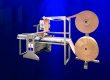
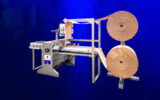




A book distributor packaging flat, uniform cartons and an automotive plant packaging irregular metal
brackets might both land on cold seal as the right technology, but they won’t run the same cold seal
packaging machine. Web width, feed mechanism, and machine configuration all shift based on what’s
actually moving down the line, and getting that match wrong means paying for capacity you don’t need or
buying equipment that can’t handle your real product mix.
That gap between “cold seal works” and “cold seal works for my line” is where most buyers get stuck.
System Packaging has spent more than 50 years perfecting the cold seal packaging machine, building
systems for many companies and industries that don’t share identical packaging problems or
run identical machines. Below is a breakdown of the applications of cold seal packaging across the
industries we build for most, with the specific models behind each one.
Direct-to-Consumer and E-Commerce Fulfillment
High-volume fulfillment operations need a cold seal packaging machine that keeps pace with variable
order volumes without adding labor. The Model 800, 900, 9000 as well are built for exactly this kind of range. It’s a double-web machine suited to a wide variety of packaging applications, which is why fulfillment operations lean on it
when the product mix changes from one shift to the next.
For lower-volume operations, System Packaging’s 200 Mini Sealer handles precut sheets of single-face
corrugated or paper-backed microfoam, producing packages up to 20 inches wide by 2.5 inches deep at
up to 250 packages per hour, a fit for smaller fulfillment centers or supplemental packaging stations that
don’t need a full production line.
Many large fulfillment-driven businesses trust System Packaging’s cold seal
systems. That kind of scale doesn’t happen with equipment that can’t handle real-world variability.
Print, Publishing, and Media
Books, catalogs, and printed media are some of the clearest applications of cold seal packaging because
the product itself is flat, rigid, and easily damaged at the corners in transit. The Model 600 is a horizontal
double-web machine currently used by a number of leading manufacturers and book publishers,
packaging everything from publications to farm machinery parts. Where product length varies from title to
title, the Model 9000 uses indexing feed fingers to handle a continuous stream of rectangular items, like
books or CDs, and adjusts the package length automatically as it runs.
Scholastic, McGraw-Hill, and Cengage Learning are all publishing brands that already run System
Packaging equipment. That’s not a coincidence. Cold seal applications in this vertical solve a problem
that heat seal can’t touch as efficiently: protecting paper and printed surfaces without introducing heat
that can warp covers or set adhesive unevenly across a stack.
Automotive
Automotive parts packaging has to survive rough handling between the plant floor and the loading dock,
often with irregular shapes that don’t sit flat on a conveyor. The Model 800 is a single-web V machine built
for items like transmission shafts, cutting blades, and automotive body moldings, using one web of cold
seal material to complete the package economically. The Model 900 shows up again here, too, since
System Packaging built it specifically to serve automotive alongside medical, building products, and light
manufacturing lines. For heavier or bulkier automotive components, the Model 600 has packaged
crankshafts and automobile engine blocks for its automotive customers.
GM, Chrysler, and Volkswagen all rely on System Packaging cold-seal machinery, choosing consistent
protection for painted finishes and precision parts without the added heat-related risks.
Medical and Healthcare
Medical device and supply packaging carries a stricter tolerance for error than almost any other category
on this list. Products that can’t tolerate heat exposure, whether due to material sensitivity or sterile
packaging requirements, are a direct match for cold seal applications, since the process bonds packaging
film with pressure-activated cohesive rather than melted adhesive. The Model 900 is the machine System
Packaging builds out for medical industry lines, given its flexibility across product shapes and sizes
without introducing a heat source near sensitive components.
Electronics
Electronic components are sensitive to both heat and static, which rules out several packaging methods
before you even get to line speed. The Model 4500 is a vertical pouch machine built for small items
including electronic parts, hardware, and fasteners, available in 6, 12, or 15-inch web widths to match
component size. The Model 9000’s ability to package rectangular items with varying lengths also serves
electronics fulfillment, particularly for CDs, drives, and similarly shaped units.
HP and Kingston are two electronics manufacturers already running System Packaging cold seal
machines. Neither company can afford heat-related damage to components moving through a packaging
line at volume, and that’s the exact risk cold seal packaging eliminates.
Apparel and Retail Fulfillment
Soft goods present a different challenge than rigid products: they need protection that doesn’t crush,
crease, or add bulk to a shipment. Cold seal packaging is an effective process for e-commerce, retail, and
distribution precisely because it adapts to a wide range of packaging applications, from folded garments
to boxed accessories, and the Model 900 is the machine most retail and apparel fulfillment lines run to
handle that variability.
American Eagle, Victoria’s Secret, Express, Nordstrom, and Kohl’s all use System Packaging cold seal
systems in their fulfillment operations. Retail returns and reshipments only add to the case for a
packaging method that seals quickly without a heat cycle slowing down high-volume, high-turnover lines.
Building Products
Building products and construction materials often combine weight, sharp edges, and finished surfaces
that scratch easily, three problems a generic packaging line struggles to solve at once. The Model 900
was built to serve building products manufacturers directly, and the Model 800’s V-style single-web design
has also packaged cabinet and trim moldings for customers in this space, protecting finished surfaces
from transport damage without adding a heat-affected seal near coated materials.
Moen, a leading building products manufacturer, packages with System Packaging cold seal equipment
to keep finished faucets and fixtures scratch-free in transit.
Sporting Goods and Recreational Equipment
Sporting goods bring back the irregular-shape problem in a different form: golf clubs, fishing rods, and
similar equipment are long, narrow, and awkward to package on standard equipment. The Model 800 was
purpose-built for this category, with golf clubs and fishing rods named directly among its core
applications. A single web of cold seal material wraps the product securely without the machine needing
to accommodate a dozen different clamping configurations for a dozen different club or rod shapes.
Matching the Machine to the Application
Every industry above solves a version of the same problem: protecting a product that doesn’t respond well
to heat, doesn’t sit flat on standard equipment, or moves through a line too fast for a slower packaging
method to keep up. Cold seal applications work across all of them because the underlying process,
pressure-activated bonding instead of heat, doesn’t care whether the product is a book, a bumper bracket,
or a blouse. What changes is the machine configuration, the web width, and the feed mechanism, which is
exactly why System Packaging builds multiple models instead of one.
If your product doesn’t map cleanly onto the applications above, that’s normal. Most buyers land
somewhere between two categories, and matching the right cold seal machinery to a specific product line
is a conversation, not a catalog lookup. System Packaging’s engineering team works directly with
customers to fit a standard model or design a custom solution around the product, not the other way
around. Browse the full lineup of packaging machinery or reach out to talk through your specific
application.
Frequently Asked Questions
Is cold seal packaging recyclable or compostable?
That depends entirely on the specific film and cohesive used, not on the machine. Recyclability and composability are properties of the packaging material itself, so the right way to answer this for your
product is to check directly with your film or material supplier for the specifications and certifications that
apply to the substrate you plan to run.
Can cold seal packaging be used for items shipped internationally through varying climates?
Cold seal packaging bonds under pressure at room temperature rather than a heat-activated adhesive,
which removes one variable affecting seal performance in transit. How a specific film and cohesive
combination performs across shipping climates still depends on the materials selected, and System
Packaging’s team can help match materials to your shipping conditions during machine selection.
Can cold seal machines be retrofitted onto an existing packaging line, or do they require a full line redesign?
It depends on your current line layout and product flow. System Packaging’s in-house engineering team, with CAD design and electrical engineering capabilities, works directly with customers to evaluate whether a cold seal system can integrate into an existing line or whether a redesign makes more sense for the application. This is assessed case by case rather than assumed either way.